Speaker Cable and Amplifier Matching Guide: How to Improve Audio Stability and Sound Quality
In modern audio systems, whether for home theaters, Hi-Fi stereo setups, recording studios, or professional stage sound systems, speaker cables play a critical role in overall performance. While many users focus heavily on amplifiers and speakers, the importance of proper speaker cable and amplifier matching is often overlooked.
A high-quality speaker cable not only ensures stable signal transmission but also helps reduce power loss, minimize distortion, and improve overall sound clarity. Choosing the correct speaker cable based on amplifier power, transmission distance, and impedance requirements can significantly enhance both audio quality and system reliability.
This guide explains the principles of amplifier and speaker cable matching, how to choose cables for different power levels, and how cable length and conductor size affect sound performance.
1. Understanding Amplifier Output and Cable Impedance Matching
An amplifier increases the strength of an audio signal and delivers it to speakers through speaker cables. During this process, cable resistance and impedance directly affect transmission efficiency and sound quality.
Most amplifiers are designed to work with specific speaker impedance ratings such as 4Ω, 6Ω, or 8Ω. Although speaker cables themselves have relatively low resistance, poor-quality cables or excessively long cable runs can increase total system resistance and negatively impact amplifier performance.
When cable resistance becomes too high, users may experience:
- Reduced power transfer efficiency
- Loss of high-frequency detail
- Weak bass response
- Increased amplifier heat generation
- Lower overall sound clarity
For this reason, selecting low-resistance, high-conductivity speaker cables is essential for achieving optimal amplifier matching and maintaining stable audio transmission.
Common speaker cable conductor materials include:
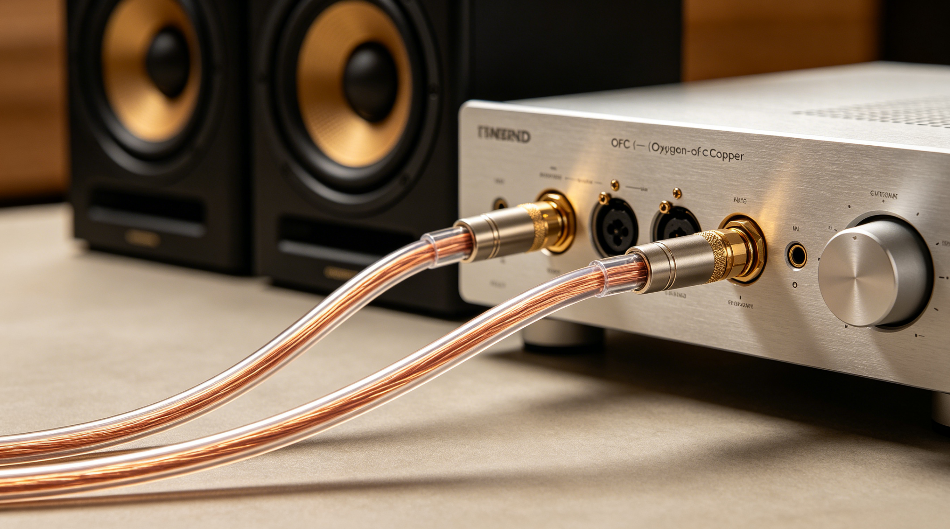
- OFC (Oxygen-Free Copper)
- Tinned Copper
- CCA (Copper Clad Aluminum)
Among these options, oxygen-free copper speaker cables are widely preferred for Hi-Fi and professional audio systems because they offer lower resistance, improved conductivity, and better long-distance signal performance.
2. Choosing Speaker Cables for Different Power Levels
Different amplifier power outputs require different cable specifications. Using undersized cables can result in signal degradation, overheating, and unstable audio performance.
Low-Power Audio Systems (Below 50W)
Suitable for:
- Background music systems
- Bookshelf speakers
- Small desktop audio systems
Recommended cable specifications:
- 16AWG or 1.5mm² speaker cable
- Cable length under 10 meters
- OFC copper conductor preferred
These cables provide sufficient conductivity for short-distance residential audio applications while remaining cost-effective.
Medium-Power Audio Systems (50W–150W)
Suitable for:
- Home theater systems
- Karaoke systems
- Mid-sized stereo setups
Recommended cable specifications:
- 14AWG or 2.5mm² speaker cable
- High-purity OFC copper
- Optional shielding for interference reduction
Thicker speaker cables help improve dynamic response and bass control in medium-power audio systems.
High-Power Professional Systems (Above 150W)
Suitable for:
- Stage sound systems
- Concert audio setups
- Large cinema installations
- Professional PA systems
Recommended cable specifications:
- 12AWG or 4.0mm² speaker cable or larger
- High-density copper conductors
- Flame-retardant and wear-resistant outer jacket
Professional systems operating under heavy loads require low-loss speaker cables capable of maintaining stable current delivery during extended use.
3. How Cable Length and Conductor Size Affect Sound Quality
Besides amplifier matching, speaker cable length and conductor size also influence overall audio performance.
Effect of Cable Length
Longer speaker cables introduce more electrical resistance, which can lead to signal loss, especially in high-frequency ranges.
Best practices include:
- Keep home audio cable runs under 15 meters whenever possible
- Maintain equal cable lengths for left and right channels
- Use larger conductor sizes for long-distance installations
When long cable runs are unavoidable, thicker speaker cables help minimize transmission loss.
Effect of Conductor Size
A larger conductor cross-sectional area reduces electrical resistance and improves power handling capability.
Benefits of thicker speaker cables include:
- Stronger bass response
- Improved dynamic range
- Reduced signal loss
- Better amplifier stability
However, oversized cables may increase installation costs and reduce flexibility. Selecting the correct wire gauge based on actual amplifier power and cable distance is the most effective solution.
4. Recommended Speaker Cable Configurations
Home Theater System Example
System specifications:
- Amplifier output: 80W
- Speaker impedance: 8Ω
- Cable distance: 8 meters
Recommended cable:
- 14AWG OFC speaker cable
- Dual-layer PVC jacket
- Anti-oxidation protection
This setup provides stable surround sound performance and enhanced low-frequency response for home entertainment systems.
Professional Stage Audio Example
System specifications:
- Amplifier output: 300W+
- Long-distance cable installation
- High dynamic audio demand
Recommended cable:
- 12AWG or 4.0mm² professional speaker cable
- Flexible heavy-duty jacket
- Flame-retardant outer layer
This configuration is ideal for professional environments requiring continuous high-power performance and reliable signal transmission.
5. Conclusion: Improve System Stability and Audio Performance
Speaker cables are far more than simple connectors. They are essential components that directly affect amplifier efficiency, signal transmission quality, and overall sound performance.
Proper speaker cable and amplifier matching helps achieve:
- Better sound clarity
- Enhanced bass control
- Reduced signal distortion
- Improved system reliability
- Longer equipment lifespan
When selecting speaker cables, users should carefully evaluate:
- Amplifier power output
- Speaker impedance
- Installation distance
- Conductor material
- Cable gauge size
High-quality speaker cables provide stable, efficient audio transmission and help maximize the performance of both home and professional sound systems.
Shenzhen Xunyu Cable Technology Co., Ltd.
Specializing in the production of various high-quality cables, our main products include network cables (Cat5e, Cat6, Cat7), coaxial cables, speaker cables, power cables, patch cords, and more, with OEM customization available.
For product selection guidance or sample testing, please feel free to contact us.
Cable Color Management: Enhance Office Cabling Tidiness & Maintenance Efficiency