Cat5e vs. Cat6: Which Ethernet Cable Should You Choose?
In today's connected world, a reliable network is the backbone of any home or business. Whether you're setting up a new office, upgrading your home infrastructure, or simply troubleshooting slow speeds, one question always comes up: Cat5e or Cat6?
Both are industry standards for twisted-pair Ethernet cables, but they serve different needs. To help you make an informed decision, we've broken down the key differences, performance specs, and ideal use cases.
1. Speed and Bandwidth
• Cat5e (Category 5 enhanced) supports speeds up to 1 Gbps (Gigabit Ethernet) at a bandwidth of 100 MHz. It's the most common choice for basic residential and small office networks.
• Cat6 (Category 6) supports speeds up to 10 Gbps over shorter distances (up to 55 meters) and offers 250 MHz of bandwidth. For distances up to 100 meters, it still delivers reliable 1 Gbps performance with better resistance to interference.
If your network demands high-speed data transfer—such as 4K/8K streaming, large file transfers, or server connections—Cat6 provides the headroom you need.
2. Interference and Reliability
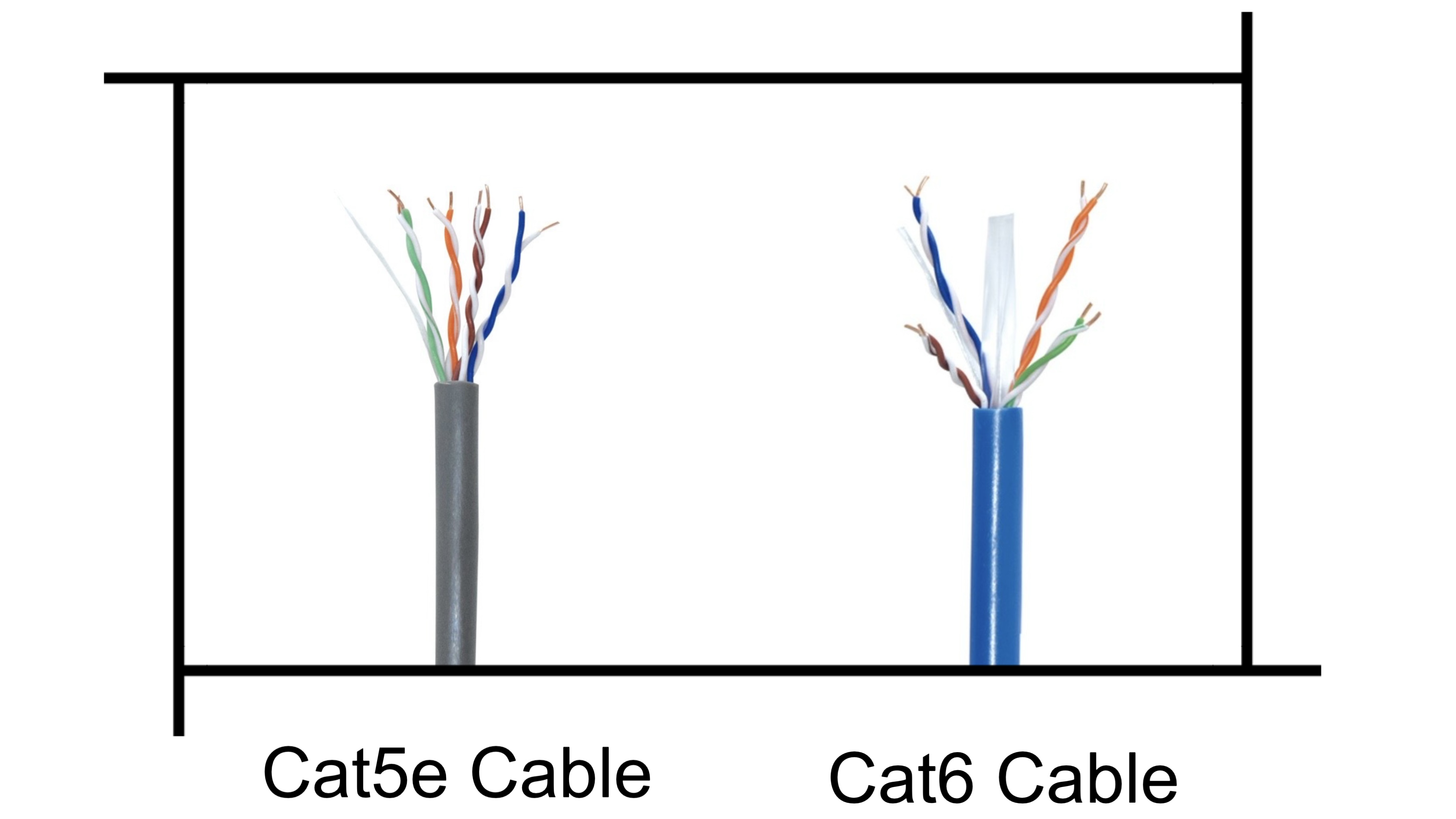
Cat6 cables feature tighter twists and often include a spline (a longitudinal separator) that reduces crosstalk—signal interference between adjacent wires. This makes Cat6 significantly more reliable in environments with many cables running together, such as server rooms, office buildings, or smart homes with dense wiring.
Cat5e, while still capable of handling typical residential interference, lacks the advanced shielding and separation found in Cat6.
3. Distance Limitations
Both cables can run up to 100 meters (328 feet) for standard Ethernet applications. However, if you plan to run 10 Gbps speeds, Cat6's maximum channel length is 55 meters. Beyond that, performance drops to 1 Gbps. Cat5e cannot achieve 10 Gbps at any distance under the standard.
4. Cost Considerations
• Cat5e is the more budget-friendly option. It's widely available and sufficient for most everyday uses: web browsing, HD streaming, video conferencing, and typical office tasks.
• Cat6 costs roughly 20–30% more per foot, but the price gap has narrowed in recent years. The extra investment pays off if you're future-proofing your network or running performance-critical applications.
5. When to Choose Cat5e
• You're wiring a small home or apartment.
• Your internet plan is 1 Gbps or lower.
• You don't plan to upgrade to 10 Gbps networking in the next few years.
• Budget is a primary concern.
6. When to Choose Cat6
• You're installing new cabling and want to future-proof for at least 5–10 years.
• You have (or plan to have) multi-gig internet service (2.5 Gbps, 5 Gbps, or 10 Gbps).
• Your environment has high electromagnetic interference (e.g., near heavy machinery, or many cables bundled together).
• You run a home office, creative studio, or business that relies on large file transfers, NAS devices, or high-speed internal networks.
Final Verdict
For most new installations today, Cat6 is the recommended choice. It offers better performance, superior resistance to interference, and the bandwidth needed for tomorrow's applications—all at a modest premium. Cat5e remains a solid, cost-effective solution for simple setups where maximum speeds are not a priority.
Published on March 25, 2026 – Stay connected with confidence.
Indoor vs. Outdoor Coaxial Cable: What's the Difference?
Cat6 vs. Cat6A: When Is the Upgrade Worth the Cost?
Related Article