Which Home and Office Network Environments Are Suitable for Cat5e Cables?
Which Home and Office Network Environments Are Suitable for Cat5e Cables?
Introduction: The Growing Network Demands of Modern Homes and Offices
With the widespread use of the internet, both homes and offices have increasingly higher network requirements. High-definition video streaming, remote work, online meetings, and the proliferation of smart home devices all demand greater network stability and faster transmission speeds. In this context, choosing the right network cable is key to ensuring optimal performance. Cat5e cables, known for their reliability and cost-effectiveness, have become an ideal choice for home and small office network setups.
Features of Cat5e Cables: Bandwidth, Speed, and Transmission Distance
Cat5e (Category 5e) cables are enhanced fifth-generation Ethernet cables with the following core features:
- Bandwidth: Supports signal transmission up to 100 MHz, meeting typical home and office network needs.
- Transmission Speed: Can handle up to 1 Gbps gigabit Ethernet connections, enabling smooth HD video playback and fast file transfers.
- Transmission Distance: Standard cabling can cover up to 100 meters in a local area network, suitable for most homes and small to medium-sized offices.
These characteristics make Cat5e cables a well-balanced option between cost and performance, making them a popular choice for many networking projects.
Recommended Use Cases: Home, Office, and Small Business
- Home Networks: Cat5e cables can support multiple devices online simultaneously, including smart TVs, computers, gaming consoles, and smart home devices.
- Office Networks: Suitable for small office environments, such as studios or startup companies with a limited number of employees, supporting everyday office software, file sharing, and video conferencing.
- Small Businesses: For businesses whose network bandwidth requirements do not exceed 1 Gbps, Cat5e cables provide a stable, cost-effective cabling solution.
Comparison with Other Cable Types (Cat6, Cat7)
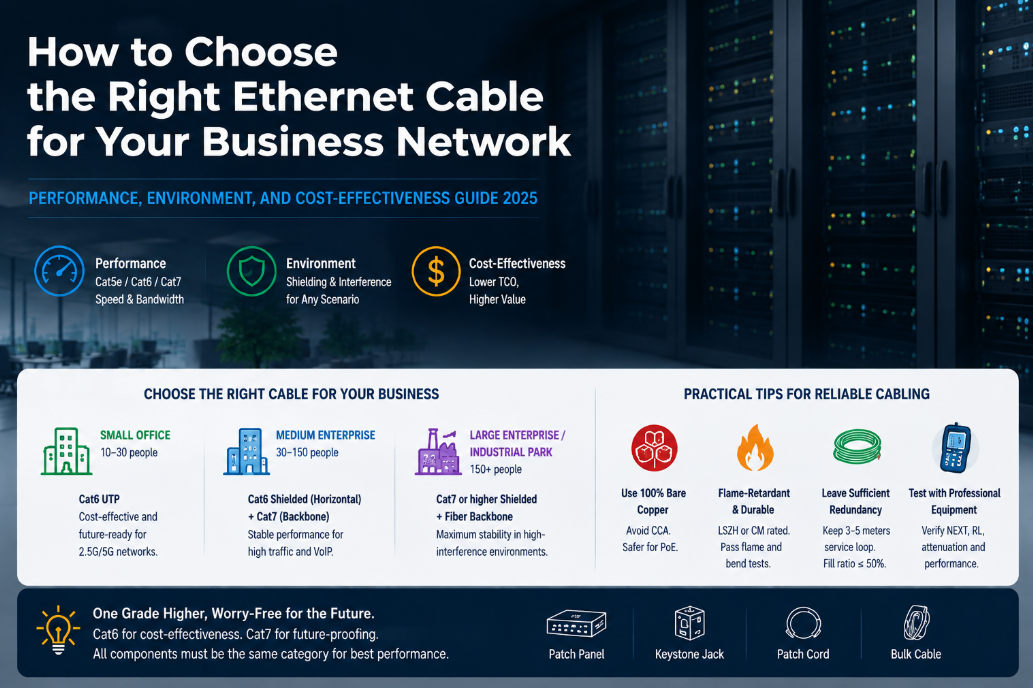
- Cat6 Cables: Bandwidth up to 250 MHz, capable of 10 Gbps short-distance transmission, suitable for environments demanding higher network speeds.
- Cat7 Cables: Bandwidth up to 600 MHz, with stronger shielding, mainly used in high-density data centers and enterprise core networks.
In comparison, although Cat5e cables offer slightly lower bandwidth and interference resistance, they are more affordable and easier to install, making them perfect for everyday use in homes and small offices.
Conclusion: When to Choose Cat5e Cables
If your network needs are primarily for general internet use, video streaming, and office file transfers—or if you have budget constraints and want convenient installation—Cat5e cables are an ideal choice. They combine stability with cost-effectiveness, providing high-value networking solutions for homes, offices, and small businesses.
Your Professional Partner for Cat5e Cables in Home & Office Networks
Shenzhen Xunyu Cable Technology Co., Ltd. specializes in manufacturing high-performance Cat5e cables, tailored specifically for home and small office network environments. Whether you need to connect smart TVs, gaming consoles, office computers, or video conferencing systems, our cables deliver stable, reliable connectivity with excellent value for money.
Not sure how to choose the right Cat5e cable for your home or office setup? Contact our team for professional guidance on cable selection and bulk pricing. We're here to help you build a highly stable network while saving on procurement costs.
WhatsApp / WeChat:+86 18925240250
How Cat7 Shielding Technology Improves Network Transmission Stability
RG59 vs. RG6: Which One Do You Need for Your CCTV or Antenna Project?
Related Article