
Home Theater Wiring Guide: How to Choose the Right Speaker Cable
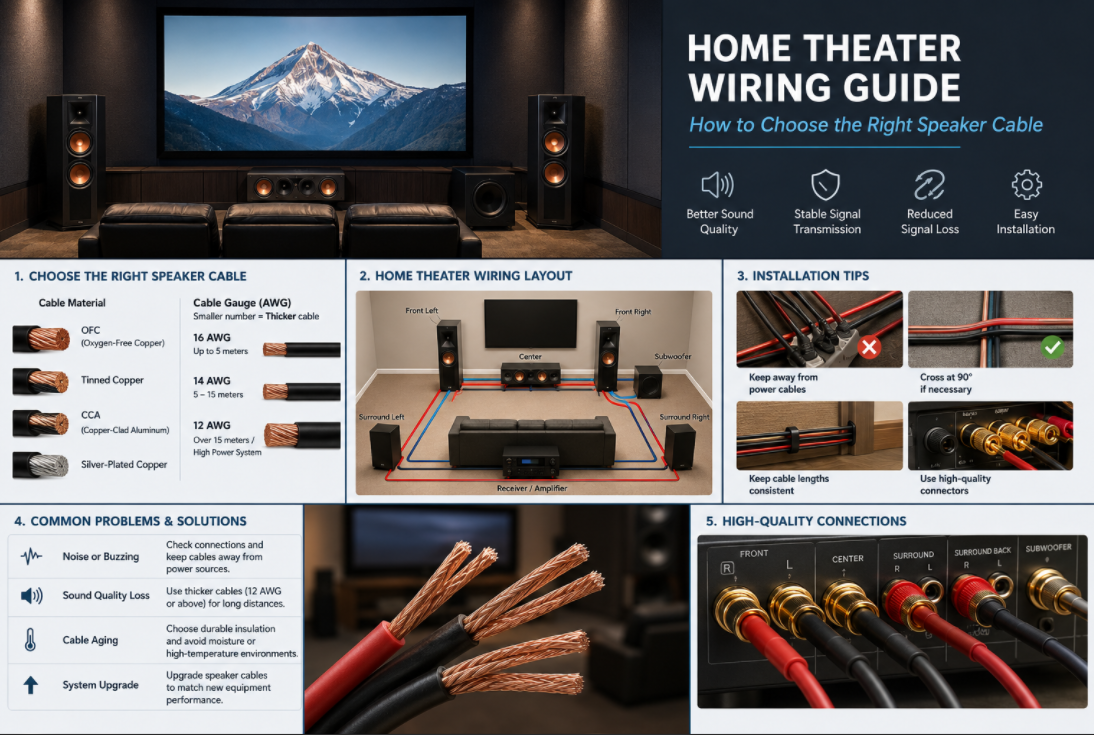
As home theater systems become increasingly popular, more users are paying attention to audio quality. Whether you are watching movies, listening to music, or gaming, high-quality sound can greatly enhance the overall immersive experience. In any sound system, speaker cables may seem simple, but they play a critical role in transmitting audio signals efficiently. Therefore, a well-designed home theater wiring setup is essential for achieving the best sound performance.
1. Audio Quality Requirements for a Home Theater System
Modern home theaters are no longer focused only on high-definition visuals. Users now expect realistic, detailed, and immersive surround sound. A high-quality audio system can accurately reproduce dialogue, deep bass, and environmental sound effects, creating a true cinema-like atmosphere at home.
However, many users focus heavily on amplifiers and speakers while overlooking the importance of speaker cables. Poor-quality cables can lead to signal loss, audio distortion, and unwanted noise. That is why choosing the right speaker cable is just as important as selecting the audio equipment itself.
Premium speaker cables help reduce electrical resistance and signal interference, ensuring stable and clean audio transmission. This becomes even more important in large living rooms or multi-channel home theater systems where longer cable runs are required.
2. Choosing the Right Speaker Cable Material and Gauge
When selecting speaker cables for a home theater system, two important factors should be considered: cable material and wire gauge.
2.1 Speaker Cable Materials
Common speaker cable materials available on the market include:
- Oxygen-Free Copper (OFC)
- Tinned Copper
- Copper-Clad Aluminum (CCA)
- Silver-Plated Copper
Among these options, Oxygen-Free Copper (OFC) speaker cables are widely recommended because of their excellent conductivity and low signal loss. Compared to standard copper wire, OFC cables provide more stable and accurate audio transmission, making them ideal for mid-range and high-end home theater systems.
Copper-Clad Aluminum (CCA) cables are usually more affordable, but their conductivity is lower than pure copper. Over long distances, CCA cables may reduce overall sound quality. For users who want better audio performance, OFC speaker cables are generally the preferred choice.
2.2 Selecting the Proper Cable Gauge
Speaker cable thickness is commonly measured using the AWG (American Wire Gauge) standard. Smaller AWG numbers indicate thicker cables.
Typical recommendations include:
- 16 AWG: Suitable for short distances under 5 meters
- 14 AWG: Ideal for most home theater wiring between 5–15 meters
- 12 AWG: Recommended for high-power systems or long-distance installations
If your home theater setup involves long cable runs or powerful speakers, thicker speaker cables can help minimize signal loss and improve overall sound performance.
In addition, larger audio systems often require cables with better conductivity to handle higher power output. Choosing the correct wire gauge can improve bass response, sound clarity, and dynamic range.
3. Home Theater Wiring Layout and Installation Tips
A professional home theater wiring layout not only improves aesthetics but also enhances long-term system stability and maintenance convenience.
3.1 Plan the Wiring in Advance
It is always best to design the cable layout during the home renovation stage. Planning ahead helps prevent exposed wires and keeps the entertainment area clean and organized.
Common home theater wiring methods include:
- In-wall concealed wiring
- Baseboard cable routing
- Ceiling cable installation
Among these options, concealed wiring is the most popular for modern home theater installations because it creates a cleaner and more professional appearance.
3.2 Avoid Signal Interference
Speaker cables should be kept away from power cables whenever possible. Running audio cables parallel to electrical wires for long distances may cause electromagnetic interference and affect sound quality.
If cable crossings are unavoidable, it is recommended to cross them at a 90-degree angle to minimize interference.
3.3 Keep Cable Lengths Consistent
In surround sound systems, the left and right speaker cables should be similar in length whenever possible. Balanced cable lengths help maintain accurate sound timing and improve stereo imaging.
3.4 Use High-Quality Connectors
Besides the cable itself, connectors such as banana plugs and spade connectors also matter. Gold-plated connectors can resist oxidation, improve conductivity, and provide more reliable long-term connections.
4. Common Home Theater Wiring Problems and Solutions
4.1 What Causes Audio Noise?
If your home theater system produces buzzing or static noise, first check whether the speaker cables are securely connected. Also ensure the cables are not placed too close to power lines or wireless devices.
4.2 How to Prevent Sound Quality Loss Over Long Distances
For cable runs longer than 15 meters, using 12 AWG Oxygen-Free Copper speaker cables is recommended to reduce resistance and maintain audio quality.
4.3 How to Prevent Cable Aging
Choose speaker cables with durable PVC or environmentally friendly insulation materials. Avoid exposing cables to moisture, excessive heat, or direct sunlight for extended periods.
4.4 Should You Upgrade Speaker Cables When Upgrading Audio Equipment?
If you upgrade to more powerful amplifiers or high-end speakers, older low-grade speaker cables may limit system performance. Upgrading the cables at the same time can help maximize audio quality.
5. Conclusion: Key Factors for Better Home Theater Sound Quality
In a home theater system, speaker cables are far more than simple accessories. They are an important factor that directly affects sound performance. Choosing the right cable material, proper wire gauge, and a professional home theater wiring layout can significantly improve the listening experience.
For users seeking premium audio quality, Oxygen-Free Copper speaker cables are highly recommended. Proper installation methods and organized cable management can also help reduce interference and maintain signal stability.
By combining high-quality equipment, suitable speaker cables, and smart wiring design, you can create a truly immersive and high-fidelity home theater experience.